Purple Spring Clipart: A Designer's Practical Review
As a designer who has spent years navigating the intersection of digital art and physical stitching, I approach every new asset with a critical eye. When I first encountered Purple Spring Clipart, my immediate reaction was to assess its potential for real-world application. The vibrant hues and organic shapes suggest a mood that is both playful and fresh, perfectly capturing the essence of a blooming season. However, before rushing to integrate any graphic into a commercial embroidery project or a personalized gift line, one must look past the screen and consider the mechanics of thread, fabric, and stitch density.
The Visual Promise vs. The Stitching Reality
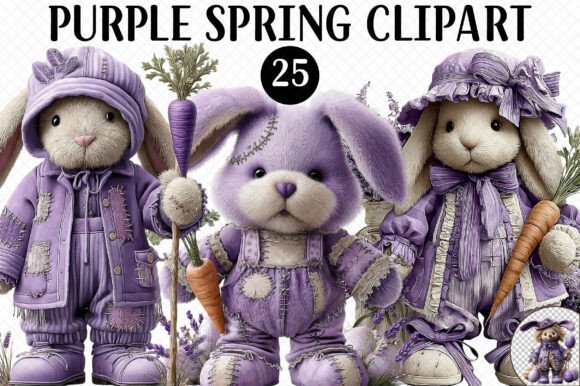
The initial impression of Purple Spring Clipart is undeniably strong. The color palette leans heavily into rich violets and soft lilacs, creating a visual personality that feels inviting and feminine. For an Etsy seller looking to refresh their spring collection, this aesthetic is compelling. It screams "boutique product" and "handmade charm." Yet, as we move from the digital realm to the machine, the conversation shifts from pixels to stitches. Since these are PNG files designed specifically for Sublimation projects or for printing, it is crucial to understand that they are not native machine embroidery designs.
This distinction changes everything. If you intend to use Purple Spring Clipart for actual stitching, you cannot simply load the file into your hoop. You would need to digitize the image first, converting those smooth gradients and crisp lines into a format your machine understands. This process requires careful judgment regarding stitch density and hoop size. The intricate details often found in spring-themed illustrations can become muddy if the digitizer attempts to replicate every curve with tight fill stitch without adequate spacing.
A Real-World Scenario: The Custom Tote Bag Challenge
Let’s imagine a specific scenario: I am preparing a custom embroidered tote bag for a local craft fair. The client wants a design that pops against a natural canvas background. I visualize Purple Spring Clipart centered on the front panel. On the screen, the contrast is perfect. But when I think about the physical execution, questions arise. Canvas is a textured fabric, and Purple Spring Clipart features delicate floral elements. If I were to digitize this for a tote bag, I would need to ensure the running stitch outlines are thick enough to hold their shape against the weave of the fabric.
If the design includes tiny petals or fine stems, translating them directly from a PNG intended for printing could result in broken threads or a lack of definition once stitched. In a finished product, customers expect clarity. A blurred or bunched-up flower due to poor digitization undermines the professional quality of the item. Therefore, while the Illustrations category offers beautiful concepts, the transition to a custom apparel piece demands a strategic approach to how the graphic is reinterpreted for the needle.
Navigating Fabric and Texture Constraints
When evaluating where Purple Spring Clipart fits best, we must be realistic about material limitations. This design works beautifully for sublimation on polyester blends, which is its primary intended use. However, if you are determined to adapt it for embroidery, you must be cautious with certain fabrics. Textured materials like heavy wool or loosely woven linen might swallow the finer details of the spring motif. Similarly, stretchy fabrics used for sweatshirt embroidery require a different stabilizer strategy to prevent the design from distorting after washing.
Consider a baby item, such as a onesie or a nursery pillow cover. Parents love the soft purple tones associated with spring, making Purple Spring Clipart an attractive choice for baby embroidery. Yet, safety and comfort are paramount. High stitch density can make the back of the fabric stiff and uncomfortable against a baby's skin. If you convert this graphic into an embroidery file, you must prioritize a looser fill pattern and perhaps use more satin stitch for borders to maintain flexibility. The goal is to preserve the visual appeal without compromising the tactile experience of the personalized gift.
Strategic Placement and Product Value
The placement of the design significantly impacts its success. On a flat surface like a tea towel or a pillow cover, Purple Spring Clipart can shine, provided the digitization respects the original flow of the image. However, on curved surfaces like caps or hats, the distortion of the design can be problematic. The organic curves of the spring flowers might warp awkwardly around the brim of a cap unless carefully adjusted. As a small shop product owner, you want your merchandise to look intentional, not accidental.
Furthermore, the visual clarity of the design affects customer trust. A well-executed embroidered patch featuring these graphics can elevate a plain jacket into a statement piece. Conversely, a poorly translated design looks cheap. If you are selling commercial embroidery items, the perception of quality is tied directly to how cleanly the design renders in thread. Using Purple Spring Clipart effectively means understanding that the beauty of the original Graphics must be preserved through skilled digitization, not just copied blindly.
Practical Notes for the Design Professional
For those considering using Purple Spring Clipart in their workflow, here are some essential steps to ensure a successful outcome:
- Test on Scrap Fabric First: Never run a new design on a final product without a test run. Check how the purple shades translate with different thread colors available in your kit.
- Review Stitch Density: Ensure the fill areas are not too dense, which can cause puckering, especially on lighter fabrics.
- Confirm Hoop Size: Verify that the entire design fits within your machine's maximum hoop size without needing to split the design, which can disrupt the visual flow.
- Inspect Small Details: Look closely at the corners and edges of the flowers. These areas are prone to pulling or breaking during stitching if not properly supported by a stabilizer.
- Check Licensing: Remember that the original product description states these are for sublimation or printing. Always confirm the licensing terms before using them to create digital embroidery files for sale or for commercial embroidery projects.
- Mockup Comparison: Use printable mockups to visualize the design on light versus dark backgrounds. Purple can disappear on black fabric, requiring significant adjustments to the design assets.
Final Thoughts on Versatility and Application
While Purple Spring Clipart is marketed primarily for sublimation and printing, its aesthetic potential for the craft business community is undeniable. With the right technical adjustments, it can serve as a stunning foundation for holiday embroidery collections, wedding favors, or seasonal boutique branding. The key lies in respecting the medium. Do not treat a raster image meant for inkjet printers as a ready-to-stitch template. Instead, view it as inspiration that requires the skill of a designer to transform into a durable, high-quality finished product.
Whether you are creating a custom apparel line or crafting a unique personalized gift, the decision to use this design should be driven by a clear understanding of the translation process. By taking the time to test, adjust, and refine, you ensure that the final result honors the beauty of the original illustration while standing up to the rigors of daily wear and wash. In the world of handmade goods, attention to detail is what separates a hobbyist from a professional, and Purple Spring Clipart offers a wonderful canvas for those willing to put in the work.