Funny Lambs Easter Clipart Bundle Review
A Designer's Reality Check on Using Graphics for Stitched Projects
I recently sat down with the Funny Lambs Easter Clipart Bundle to see if these playful illustrations could translate into high-quality, stitched merchandise for my upcoming spring collection. As someone who has spent years turning digital files into tangible finished products, I know that a design looking good on a screen is only half the battle. The real test happens when you load it into your machine and watch the needle dance across the fabric. This bundle falls under the category of Graphics and Illustrations, but the product description carries a critical warning: these are PNG files designed specifically for sublimation or printing, not SVGs or layered vector files.
This distinction immediately shifts how I approach using this asset. If you are an Etsy seller or a small shop owner looking to expand your line with custom apparel or embroidered patches, understanding the limitations of a raster-based PNG is vital before you commit to production. While the visual charm of these lambs is undeniable, their technical format dictates a very specific workflow. Let's dive into how I would actually use this in a real-world scenario, the challenges I anticipate, and the practical steps to ensure your handmade product looks professional.
The Visual Appeal and Mood of the Design
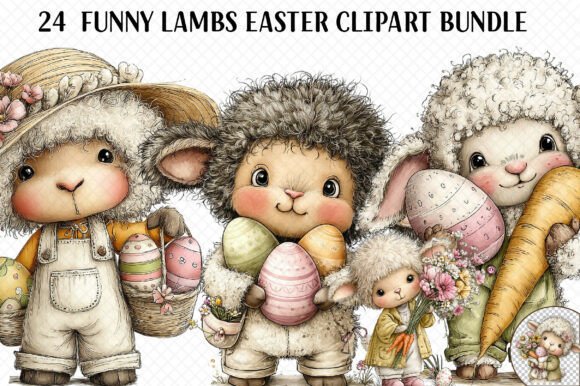
At first glance, the Funny Lambs Easter Clipart Bundle exudes a cheerful, whimsical energy perfect for the holiday season. The shapes are clean, the expressions are endearing, and the color palettes are vibrant. For a holiday embroidery project, the mood is spot-on. These graphics scream "spring," making them ideal for baby clothes, nursery decor, or lighthearted tote bags. However, as a designer, I am trained to look beyond the cute factor. I need to assess the line weight, the level of detail, and how the colors interact.
In the context of machine embroidery design, the simplicity of these illustrations is both a blessing and a curse. Because they are intended for sublimation, the details might be rendered with gradients or soft edges that do not exist in traditional thread work. When converting a PNG to an embroidery file, you cannot simply rely on the software to guess where the satin stitch should go versus the fill stitch. You often have to manually trace the outlines to create a new digitized version. If you attempt to embroider directly from a printed transfer without proper conversion, you risk losing the crisp definition that makes the lamb look funny and charming rather than muddy and undefined.
Real-World Application: The Custom Tote Bag Scenario
Let's imagine a specific project: creating a limited-run set of canvas tote bags for a local craft fair. I want to feature one of the lambs holding a basket of eggs on the front pocket. The Funny Lambs Easter Clipart Bundle offers a great starting point for the layout. However, because these are not vector files, scaling the image up to fit a large tote bag without pixelation is impossible. If I were to print this via sublimation onto a polyester blend bag, the result would be stunning and true to the original art.
But what if my customer wants a classic cotton canvas bag with actual stitching? Here is where the practical judgment comes in. I would need to take the PNG, import it into my digitizing software, and carefully redraw the paths. I would focus on thickening the outlines to ensure they hold up after multiple washes. For a tote bag design, durability is key. A thin running stitch outline might break quickly on a heavy-duty bag. Instead, I would opt for a wider satin stitch border around the lamb's shape. This adds texture and depth, transforming a flat graphic into a tactile element that customers love to touch.
Navigating Technical Limitations and Fabric Choices
One of the most important lessons for any craft business owner is knowing when a design fits the medium. The Funny Lambs Easter Clipart Bundle is explicitly marketed for sublimation. This means if you try to use it for dark fabric projects without significant modification, you will face issues. Sublimation generally requires light-colored, synthetic fabrics to show the full vibrancy of the ink. If you are aiming for a black sweatshirt, a direct print won't work well unless you use a white underbase, which changes the hand feel of the garment.
For embroidery, dark fabrics require careful consideration of thread colors and stitch density. If the lamb illustration has light gray or pastel details, those might get lost against a navy blue background. I would advise testing the design on scrap fabric first. Check the contrast between the thread and the material. Ensure that the hoop size you choose can accommodate the entire design without distorting the image. Small hoop sizes can compress the details of the lamb's face, making it look squashed. Always confirm that the design assets you purchase align with your intended output method.
Practical Notes for the Professional Maker
If you decide to incorporate these graphics into your commercial embroidery workflow, here are my top recommendations based on experience:
- Test on Scrap Fabric First: Never skip this step. Stitch out a sample on the exact type of fabric you plan to sell. Check for puckering, especially if the design has dense areas.
- Review Stitch Density: Since the original files are for printing, the "density" of the artwork is visual, not physical. When digitizing, ensure you don't over-stitch. Too much fill stitch can make the fabric stiff and uncomfortable, particularly on baby embroidery items like onesies or bibs.
- Use Proper Stabilizer: Whether you are working with stretchy knits for a sweatshirt embroidery project or woven cotton for a pillow cover, the right stabilizer is non-negotiable. It prevents the design from shifting during stitching.
- Check Licensing Carefully: Before selling any personalized gift or small shop product, verify the license terms. Some clipart bundles allow personal use only, while others permit commercial sales of finished goods. Do not assume; always read the fine print to protect your business.
- Create Mockups: Use printable mockup tools to visualize how the design will look on different products. Test it in black and white to ensure the value structure holds up even without color.
Final Thoughts on Value and Versatility
The Funny Lambs Easter Clipart Bundle is a delightful resource for designers who understand the difference between a printable graphic and a ready-to-stitch file. Its strength lies in its ability to serve as a reference or a base for sublimation projects. For those of us in the digital product sellers community, it offers a fresh aesthetic for spring collections. However, it requires extra effort to adapt for traditional embroidery.
If you are an Etsy seller looking for quick wins, these PNGs are perfect for instant download prints or sublimation transfers. But if you are building a brand around high-end embroidered patches or custom clothing, you must invest time in re-digitizing these images to achieve the quality your customers expect. By taking the time to test, adjust, and refine, you can turn these charming illustrations into premium finished products that stand out in a crowded market. Remember, the best designs are not just about what they look like on a screen, but how they feel, wear, and last in the hands of your customers.