Trouble Maker Funny Cartoon: A Designer Review
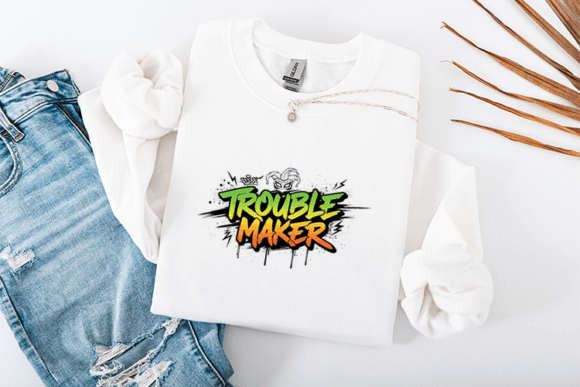
When I first pulled up the Trouble Maker Funny Cartoon file on my screen, I wasn't just looking at another graphic; I was assessing a potential centerpiece for my upcoming fall collection. As someone who spends hours balancing stitch density and fabric tension, I know that a design's visual impact on a monitor is only half the battle. The real test happens when the needle hits the cloth. This particular piece, described as bold and edgy with vibrant comic elements and graffiti-inspired details, immediately signaled a specific mood. It feels rebellious yet playful, exactly the kind of energy that translates well into custom apparel or statement patches.
First Impressions and Visual Personality
The layout of Trouble Maker Funny Cartoon is striking. The typography isn't standard; it has that hand-drawn, slightly chaotic vibe typical of street art but cleaned up enough to be legible. For an embroidery project, this is crucial. If the lettering is too jagged, the machine might struggle to follow the path, resulting in puckered threads. However, the design here seems to strike a balance between artistic flair and technical feasibility. The vibrant comic elements suggest a need for high-contrast thread colors to pop against the background. When I imagine this as a machine embroidery design, I see thick fill stitches creating those bold shapes, perhaps accented with satin stitching on the outlines to give it that crisp, professional edge.
Visually, this fits perfectly into the T-Shirt Designs category, but its versatility extends far beyond simple cotton tees. The "graffiti-inspired details" hint at texture. In embroidery, we often mimic texture through varying stitch directions and densities. This design invites experimentation. Would it work better as a flat embroidered patch or integrated directly onto a heavy garment? My instinct says it would look phenomenal as a large-scale back print on a sweatshirt or even on a canvas tote bag where the fabric can support the weight of the stitching without distorting.
Real-World Application: The Custom Sweatshirt Scenario
Let's talk about a real-life scenario. Imagine I'm preparing a batch of limited-edition sweatshirts for a local boutique client. They want something that appeals to teenagers and young adults—something with attitude. I decide to use Trouble Maker Funny Cartoon for the back of a heavyweight grey fleece sweatshirt. The size of the file is listed as 12 x 12 inches, which is substantial. This means I need a large hoop and a robust stabilizer to prevent the fabric from shifting during the long run time required for such a large area.
In this context, the design becomes a focal point. Customers don't just buy a sweatshirt; they buy the statement. The edgy nature of the text combined with the cartoon style creates a unique product that stands out on an Etsy shelf or at a craft fair. Unlike generic clip art, this feels like a curated digital product asset. When I visualize the finished product, I see the thread catching the light, giving depth to the comic bubbles and the graffiti drips. It transforms a basic garment into a collectible item. For a small business owner, this kind of design drives engagement because it tells a story before the customer even reads the description.
Navigating Fabric and Hoop Challenges
However, not every project is a smooth ride. While the design is impressive, there are areas where caution is necessary. The intricate details mentioned in the description could be problematic on thin or stretchy fabrics. If I were to attempt this on a lightweight t-shirt without proper backing, the dense stitch areas might cause the fabric to pucker, ruining the drape. Similarly, on textured fabrics like corduroy or denim, the fine lines of the graffiti details might get lost in the weave.
Another consideration is the curved surface of a cap. While the main typography is bold, the smaller decorative elements might distort if forced around the curve of a baseball hat. For caps, I would likely recommend simplifying the design or focusing only on the central logo element rather than the full 12-inch spread. Also, dark fabrics require careful thought regarding thread colors. The "vibrant comic elements" need to be bright enough to show up against black or navy backgrounds. Using a white underlay is non-negotiable here to ensure the top layers of color remain vivid and true to the original embroidery file.
Practical Notes for Designers and Makers
If you are planning to use Trouble Maker Funny Cartoon for your own projects, whether for a personalized gift or commercial sale, here are some practical steps to ensure success:
- Test on Scrap Fabric First: Never skip this step. Run the design on a scrap piece of the same fabric you intend to use. Check for puckering, especially in the dense fill stitch areas.
- Check Thread Color Contrast: The design relies on vibrancy. Ensure your thread palette matches the digital preview. If using a dark garment, increase the brightness of your thread selection.
- Review Stitch Density: Large designs like this can have heavy stitch counts. Verify that your machine can handle the density without breaking needles or skipping stitches.
- Confirm Hoop Size: With a 12 x 12 inch dimension, you will need a large hoop. Ensure your machine supports this size and that you have the correct frame.
- Inspect Small Details: Zoom in on the graffiti-inspired details. Are they too fine for your specific thread type? You may need to adjust the digitizing settings to thicken certain lines.
- Use Proper Stabilizer: For large areas of fill, a cut-away stabilizer is usually best to provide lasting support, especially on garments that will be washed frequently.
- License Verification: Before selling any finished items or the digital file itself, confirm the licensing terms. Is it for personal use only, or does it allow for commercial embroidery?
Value and Market Appeal
Ultimately, the value of Trouble Maker Funny Cartoon lies in its ability to elevate a handmade product. In a market saturated with basic text logos, a design with character and visual complexity builds trust with the buyer. It shows that the maker put thought into the aesthetic. Whether you are creating holiday gifts, nursery decor (perhaps for a mischievous toddler), or boutique merchandise, this design adds a layer of professionalism and creativity.
For the Etsy seller or craft business owner, offering items with this level of detail can justify a higher price point. Customers are willing to pay more for quality embroidery that looks like a custom-made piece of art rather than a mass-produced sticker. The design's adaptability allows it to fit various niches, from streetwear brands to personalized home goods like pillow covers and kitchen towels. Just remember, the key to success is execution. By respecting the design's requirements for stabilizer, fabric choice, and thread quality, you turn a digital graphic into a tangible, high-quality finished product that customers will love to wear and display.